
Screen Time & Myopia: What the Latest Research Says About Kids’ Eyes

Many parents wonder whether all that time on tablets, phones, and computers could be affecting their child’s vision. Recent research points to a growing link between screen time and myopia, or nearsightedness, in children. As more kids spend time on digital devices for school, entertainment, and communication, it becomes even more important to understand how screen habits may influence eye development and why pediatric eye exams matter.
Why Kids’ Eyes May Be More Vulnerable
Children’s eyes are still developing, which makes visual habits especially important. Extended near work—including tablets, phones, and computers—may place extra strain on the focusing system. At the same time, less time outdoors may remove a protective factor that many experts now emphasize in myopia prevention and control. Both the American Academy of Ophthalmology and AAPOS point to outdoor time as an important part of healthy visual development.
What the Latest Research Really Means
The latest research does not mean screens are the only cause of myopia. Genetics, reading habits, and overall lifestyle also play a role. Still, newer evidence shows that heavy digital screen exposure may contribute to a child’s risk, especially when combined with long stretches of close-up work and limited outdoor activity. That makes early monitoring more important, not less.
Where Pediatric Eye Exams Fit In
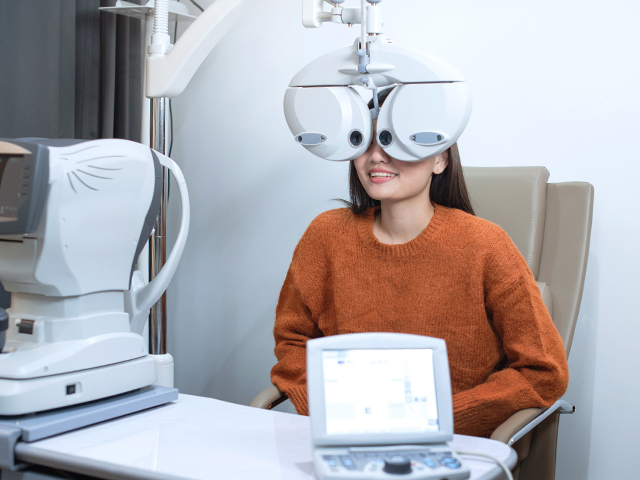
A pediatric eye exam can help detect early signs of myopia before a child starts struggling in school or during daily activities. Kids do not always realize their distance vision is getting worse, and screen-related symptoms can be easy to miss. Regular eye exams allow an optometrist to track prescription changes, evaluate visual habits, and discuss whether a child may benefit from early intervention.
This is especially important because myopia often progresses during childhood. The earlier it is identified, the more opportunities there may be to slow that progression with a personalized care plan.
Everyday Habits That May Help
There is no single fix, but healthy visual habits can support children’s eyes:
Encourage regular breaks during screen use with the 20-20-20 rule
Keep screens and reading material at a comfortable distance
Make outdoor play part of the daily routine
Watch for signs like squinting, headaches, or sitting too close to screens
Schedule pediatric eye exams to monitor for early myopia changes
These steps are practical, but they work best when paired with professional guidance. AAPOS specifically recommends screen breaks, proper viewing distance, and daily outdoor time as helpful habits for children.
How Myopia Management Can Help
If a child is already becoming more nearsighted, myopia management may help slow progression. Rather than only updating glasses year after year, myopia management focuses on long-term eye health and reducing the rate at which myopia worsens. That is why combining routine pediatric eye exams with timely myopia management can be such an important step for growing kids.
To learn how screen time may be affecting your child’s vision, contact Chen Family Eyecare to schedule a pediatric eye exam today. Visit our office in Chicago or Northbrook, Illinois. Call (773) 878-3456 or (847) 564-3937 to book an appointment.
Quick Links
Helpful Articles
article_category: products
article_category: psychiatry
article_category: faqs
article_category: cats
article_category: general
article_category: services
article_category: technology
article_category: dogs
article_category: restorative
article_category: vision therapy
article_category: contact lenses
article_category: health
article_category: conditions
article_category: eye surgery co-management
article_category: exotic
article_category: cosmetic
article_category: surgical procedures
article_category: aesthetics
article_category: preventative
article_category: ocular disease management
article_category: eyeglasses
article_category: eye health
article_category: large animal
[]
article_category: psychiatry
article_category: faqs
article_category: cats
article_category: general
article_category: services
article_category: technology
article_category: dogs
article_category: restorative
article_category: vision therapy
article_category: contact lenses
article_category: health
article_category: conditions
article_category: eye surgery co-management
article_category: exotic
article_category: cosmetic
article_category: surgical procedures
article_category: aesthetics
article_category: preventative
article_category: ocular disease management
article_category: eyeglasses
article_category: eye health
article_category: large animal
[]
Flowbite is an open-source library of interactive components built on top of Tailwind CSS including buttons, dropdowns, modals, navbars, and more.
Check out this guide to learn how to get started and start developing websites even faster with components on top of Tailwind CSS.
All Eye Care Services
Find personalized eye care excellence with our comprehensive services. From eye exams to advanced diagnostics, trust us for all your vision needs.

Keep In Touch
For non-urgent questions or to learn more about our services, contact us today!

© 2026 Chen Family Eyecare. All rights Reserved - Accessibility Statement - Privacy Policy - Sitemap
Managed and Designed by 